stats

Tuesday, 6 July 2010

A glimpse of England


I have decided to place a few shots of various places that I have visited in England in the past few years.  It will give you a flavour of the variety of scenery you can find on a visit to our country.   
The shot below is of the choir of perhaps the most famous cathedral in England.  This part of Canterbury cathedral was built by the Normans, as can be seen in the rounded arches.


This is a shot of one of the splendid stain-glass windows.
 During the war the German Luftwaffe tried to destroy the ancient building, but a strong wind carried the bombs away to the east of the town.  

The shots below are of a sleepy Victorian seaside resort to  the north-east of London - Aldeburgh


Below is one of my favourite Bed and Breakfast venues.  It is found near the market town of Framlingham in Suffolk.  

Last year we went  for a week to the coast of Northumbria.  The coastline is superb and the towns and islands are full of historical and religious interest.


This shot is of the quaint village of Clapham in the glorious Yorkshire Dales, where the famous scientist Michael Faraday was born. 


Wherever you go in England you can usually find a good pub or inn where you can chill out and refresh your tired limbs..   Many of them are hundreds of years old.


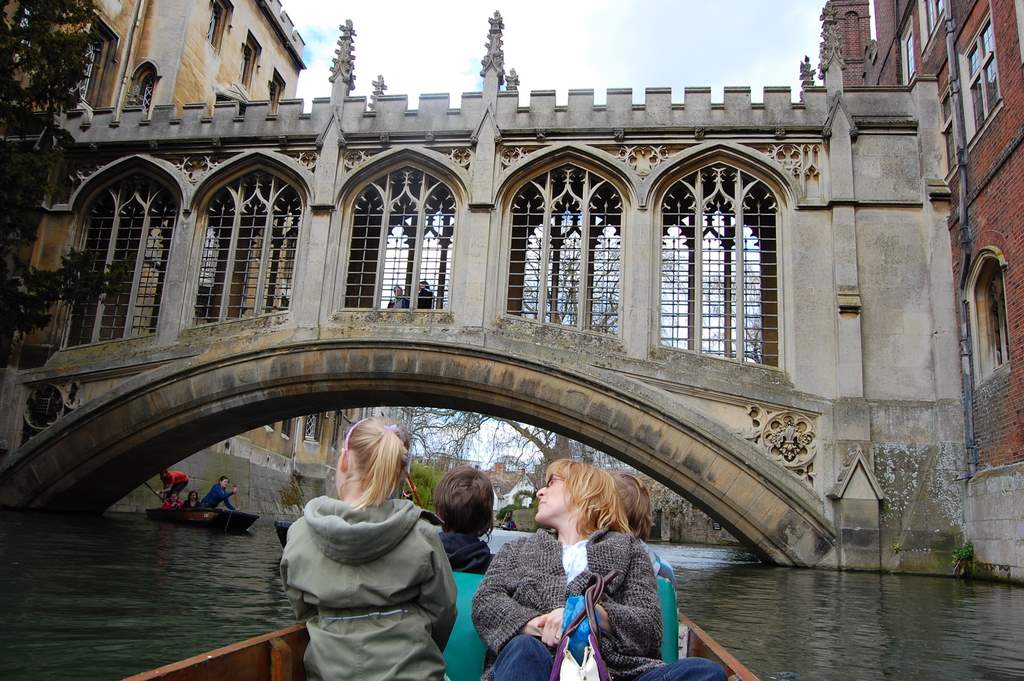
One of life's greatest pleasures is to punt along the Cam and under the Bridge of Sighs at Cambridge!


Last of all: my wife looking out on a typical valley in Wales.


Monday, 21 June 2010

Ffald y brenin


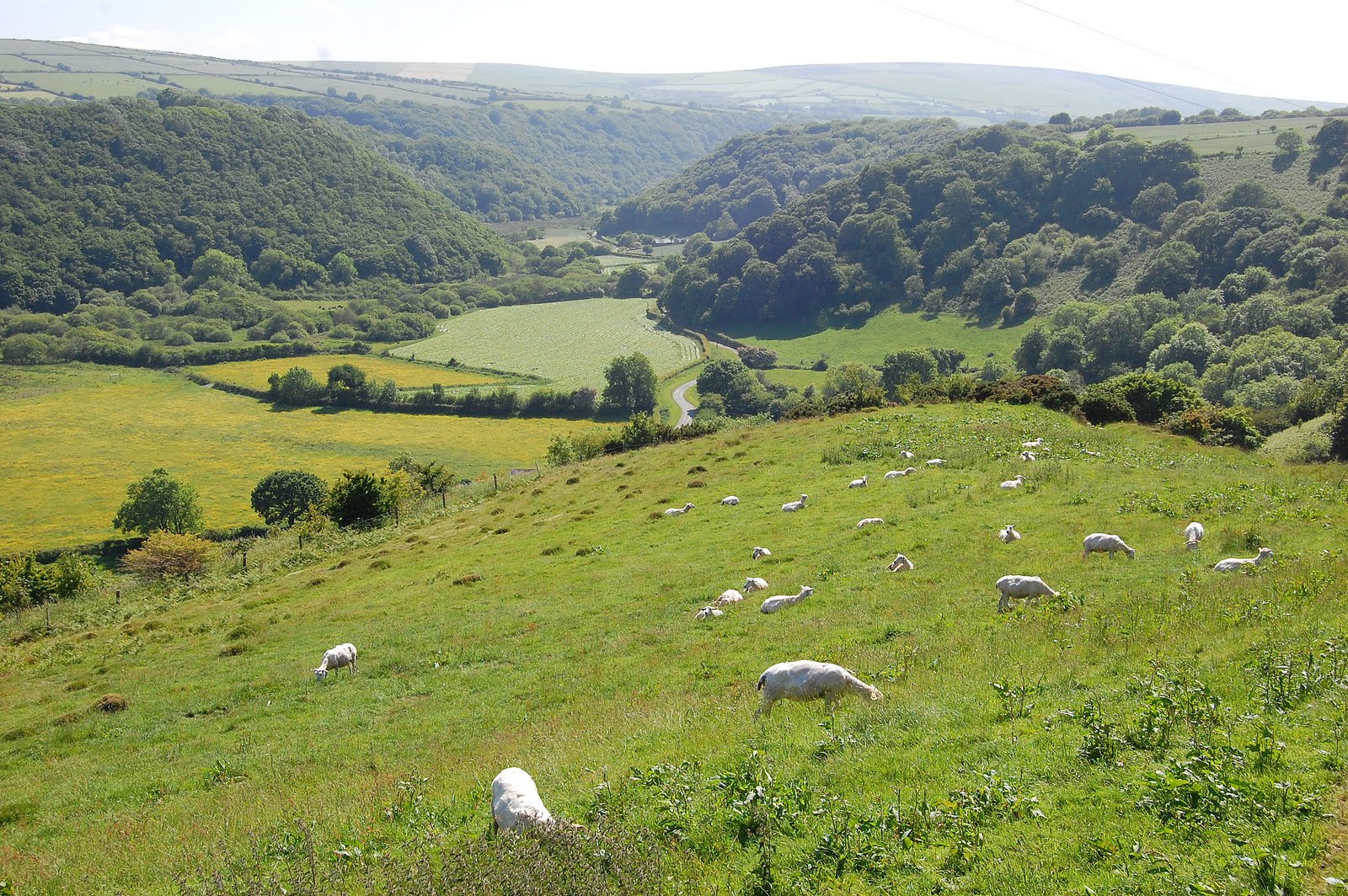
Earlier this week we drove nearly three hundred due west from London to the furthest coast of Pembrokeshire.   We were booked to go on a retreat at  Ffald-y-Brenin, a centre about five miles west of Fishguard.   Many Christians have been here since reading  a book called The Grace Outpouring.   


This is view overlooking Cwm Gwaun, a narrow valley of great interest and beauty.  Of course the locals all speak Welsh.


At the edge of the property they have built a wooden cross.   Many of the guests visit the spot to meditate and pray


The whole site has been tastefully designed and maintained.


This is the view of the tastefully designed garden with its pond full of tadpoles.  the pond is fed by a stream that has been piped across the surrounding hills.  The chapel below has been built around a large rock  Several times a day  short Celtic-style services are held.


Friday, 18 June 2010

Prayer in Mayfair

Shepherds Market

Claridges
A few months ago we decided to do one of those walks around London that are so popular.  We took the walk that goes around Mayfair, the most prosperous part of London. We went passed the American embassy and on to a fascinating area I had never visited, Shepherds Market.  Quite nearby is Claridges one of the most expensive and chic hotels in Europe.


We then went down Mount Street with its fashionable boutiques and on to the Burlington Arcade with its collection of expensive jewellers selling the most desirable and sought-after watches.  
Off Mount Street there is a small oasis of greenery and quietness in the midst of this busy area.  Mount Street Park is an attractive garden  with an fine assortment of trees, where office workers can eat their lunches and chill out on summer days.
Nearby is the Farm Street Jesuit Centre with its beautifully ornate baroque style church.  


 As I looked on the parish notice board I noticed a leaflet advertising monthly Ignatian Days, when a group would be introduced to the practice of Ignatian methods of prayer.  Although I am a protestant I have studied church  history and I am familiar with Ignatius Loyola and the foundation of the Jesuits.  


Ignatian prayer is really quite simple.  While Ignatius was recovering from a serious wound after the battle of Pamplona he asked for some novels to while away the time.  Instead he was given a life of Christ by Ludolph of Saxony.  Ludolph urged his readers to immerse themselves in the gospel narratives and to "hear and see these things being narrated as though you were hearing with your own ears and seeing with your own eyes."  Ignatius adopted this idea and used used intensively in the training of his followers.
 Ignatian  prayer is taking a passage from the Bible and immersing oneself imaginatively  in the text and meditiating on its content, ending with a personal conversation with Jesus.


The  best introduction to all this is The God of Surprises by Gerard Hughes

Friday, 4 June 2010

Suffolk and Norfolk


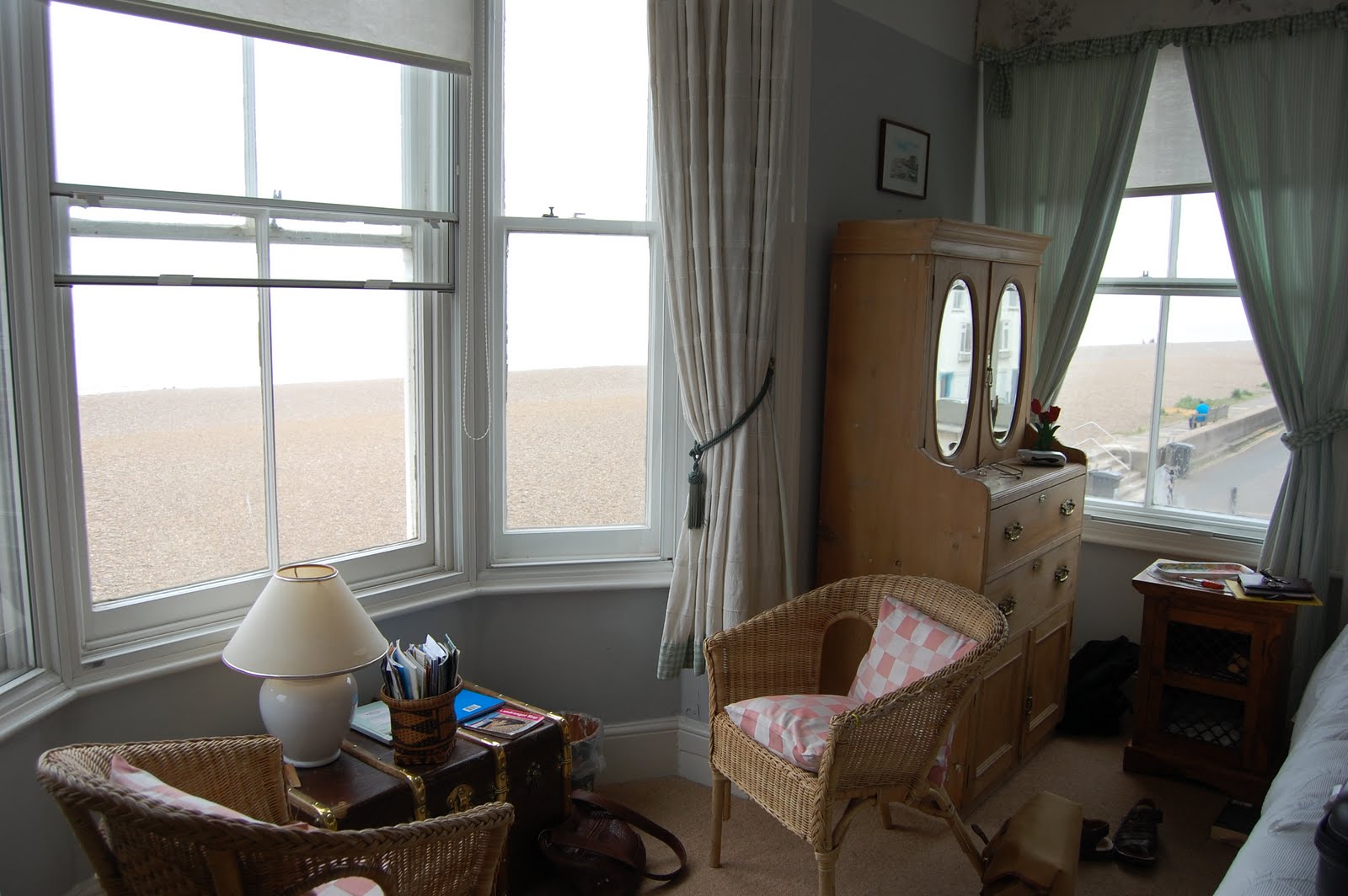
We decided to have a short break in what is known as East Anglia in this part of the world.  It is very rural and peaceful and has the least pollution in the whole of the UK.  First of all we spent two nights in Aldeburgh,  an unspoilt resort that was once a fairly thriving fishing port.  In fact if you are up early you can go down to the beach and buy some of the last night's catch from the fishermen's huts. The picture above is the view from our bedroom window overlooking the beach.
This is the view of Ocean House where we stayed.   The boat seems a permanent fixture on the shingly beach.  It's always there.


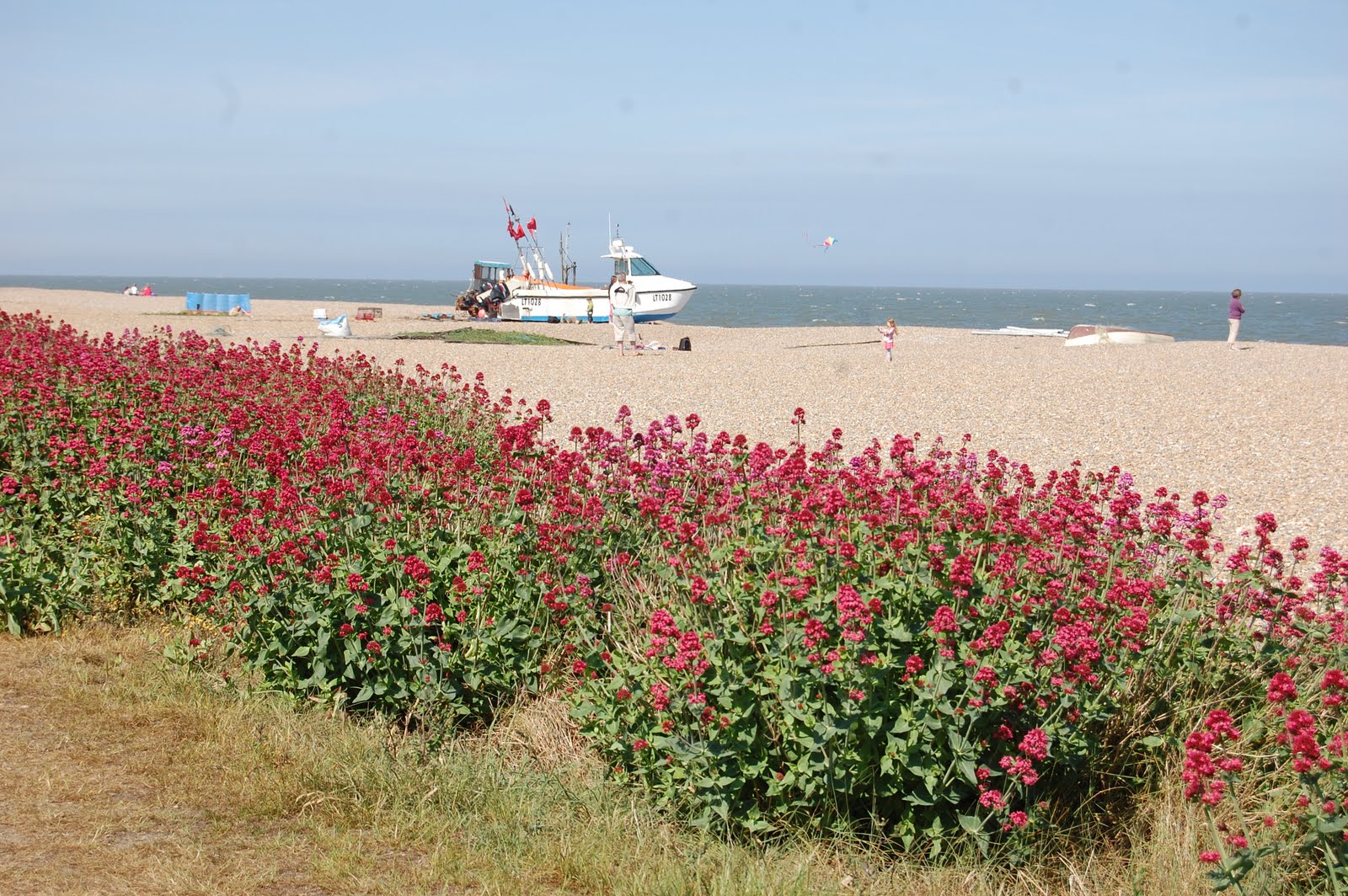
I took this shot of a boat through a mass of very attractive red-valerian, a wild flower that thrives on the shingle.


I took this shot from the bridge at Snape, a village now famous for the Aldeburgh Festival.  It was once a large grain distribution centre, but is now a tourist attraction that has retained its Victorian atmosphere.
Just a mile or two north of Aldeburgh is the attractive seaside-village of Thorpeness.  It is unique because it is the creation of one man, a successful barrister name Glencairn Olgilvie   who decided in 1910,  to build a mock-Tudor village for the pleasure and recreation of his friends and workers.  Its main attraction is the boating lake known as the Mere.


This is the view across the lake.  The historic windmill can be seen and also the rather eccentric House in the Clouds,  which can be hired as a holiday home.

The next day we drove  over to a camp-site near to the old town of Theford.  Part of the journey involved using  the A1120 from Yoxford to Stowmarked.  The journey took us through what I consider to be the most gloriously beautiful countryside in the whole of Europe.  Everywhere nature seemed to be robed in the most splendid robe of vivid greens,  the hedgerows and the masses of may-blossom adding to the scene.  All along we passed through many very quaint and peaceful villages and hamlets.  It was somewhat of a shock to get on the the motorway near Stowmarket.
Just near the campsite is the celebrated Pingo Trail that runs through the nearby forest.  The Pingos we are told are tiny lakes left by the glaciers of the ice age, containing the most interesting flora and fauna.  We cycled through the forest and had a substantial lunch in the sixteenth-century known as the Chequers (see above) in the attractive village of Thompson.


Top above you can see a typical scene from rural Norfolk and just below is an example of a Pingo.

Friday, 21 May 2010

Listening - part two

In my previous post I wrote about the privilege and necessity of listening to one another.  In our rushed and hectic world, even in the church, this is often forgotten and overlooked.  We always seem to put doing  above being.
The supreme form of listening of course is listening to God.  Our God wants a two-way fellowship with his children.  Often we usually make it a one-way fellowship.  We come to God with our spiritual shopping list and bombard Him with our requests.  We rarely stop to listen to  what he has to say.  In the end the whole thing is in danger of becoming boring and sterile. 
George Muller of Bristol was an immensely influential figure in the nineteenth century.  he said that the secret of his effectiveness was his determination to keep his soul happy in the Lord.  He did this by regular scripture reading and listening to God in the morning.  I quote his words.


    I saw more clearly than ever that the first great primary business to which I ought to attend every day was, to have my soul happy in the Lord . . . not how much I might serve the Lord, . . . but how I might get my soul into a happy state, and how my inner man might be nourished. For I might seek to set the truth before the unconverted, I might seek to benefit believers . . . and yet, not being happy in the Lord, and not being nourished and strengthened in my inner man day by day, all this might not be attended to in a right spirit. Before this time my practice had been . . . to give myself to prayer after having dressed myself in the morning.
      Now, I saw that the most important thing I had to do was to give myself to the reading of the Word of God, and to meditation on it, that thus my heart might be comforted, encouraged, warned, reproved, instructed; and that thus, by means of the Word of God, whilst meditating on it, my heart might be brought into experimental communion with the Lord.


    In the first half of the  twentieth century the Oxford Group was very influential.  Although I think that their emphases were a bit one sided and unbalanced,  they did introduce the idea and the practice of listening to God to many Christians.  Their practice was quite simple;  chose a quiet place, preferably in the morning, get yourself relaxed, take a pencil or pen and a clean sheet of paper, then simply make your mind receptive to God. Write down whatever comes to you even if it seems a bit odd.  At the end of your session delete whatever is obviously foolish or erroneous.   
    As you persevere you will be surprised what comes.   


    Thursday, 13 May 2010

    Listening

    People are so busy these days that a constant complaint often heard is that nobody seems to listen.  Often a person is speaking about something that really is important, but the listener, by his body language and shifting eyes, gives the infallible impression that he isn't paying attention. Or a person begins to speak about their family  or their inner problems when their listener immediately begins to talk at length about themselves. Some people have the ability to spend a long conversation talking solely about what concerns them. 


    Perhaps the most common complaint that wives make to their husbands is this, "I don't want you to rush and sort out the problem; I just want you to listen to me and truly hear me." 


    I have found an excellent quotation written by Dietrich Bonhoeffer while he was running a sort of illegal seminary in Finkenwalde in the Baltic region.


    LISTENING

    The first service that one owes to others in the fellowship consists in listening to them. Just as love to God begins with listening to His Word, so the beginning of love for the brethren is learning to listen to them. It is God's love for us that He not only gives us His Word but also lends us His ear. So it is His work that we do for our brother when we learn to listen to him. Christians, especially ministers, so often think they must always contribute something when they are in the company of others, that this is the one service they have to render. They forget that listening can be a greater service than speaking.
    Many people are looking for an ear that will listen. They do not find it among Christians, because these Christians are talking where they should be listening. But he who can no longer listen to his brother will soon be no longer listening to God either; he will be doing nothing but prattle in the presence of God too. This is the beginning of the death of the spiritual life, and in the end there is nothing left but spiritual chatter and clerical condescension arrayed in pious words. One who cannot listen long and patiently will presently be talking beside the point and be never really speaking to others, albeit he be not conscious of it. Anyone who thinks that his time is too valuable to spend keeping quiet will eventually have no time for God and his brother, but only for himself and for his own follies.

    Tuesday, 4 May 2010

    Toc H and Tubby Clayton

    Almost exactly three years ago a friend and I  decided  to visit the war graves of northern France and Belgium.  We had both lost uncles in the Great War.  We decided to base ourselves in the beautiful medieval  town of Ypres, fondly known as Wipers by many thousands of British soldiers.  This town, almost totally destroyed in the war, has been painstakingly rebuilt and the ancient cloth hall in the main square is a marvellous piece of architecture.


    The land towards the  east of Ypres is an area that has seen more bloodshed and vicious fighting than almost an area on the  planet.  Wherever you travel you are met with neat and tidy British cemeteries,  with row after row  of simple white tombstones edged carefully with flowers.  It is a quietly moving experience to travel to the town that epitomises the senseless slaughter of 1917, the small Flemish town of Passiondale, the very name of which seems to evoke profoundly sad memories.  (I was told, however, that the word has no associations with the Latin word, passio, to suffer).  I remember sitting quietly drinking coffee is a small cafe in the main square,  thinking about the savage fighting that led to its capture during the Third Battle of Ypres in 1917. It all seemed so unreal. 


    We left Ypres for a day and travelled to the market town of  Poperinge.  We wanted to pay a visit to Talbot House.  It was here that Rev. Tubby Clayton (1885-1972) exercised a profound ministry to the troops. He and another British officer bought a large town house near the centre and opened it as a place of rest and refreshment to the  thousands of British troops who were billeted nearby. It was a remarkable place where troops could rest, read, think and pray in a peaceful atmosphere.  It was probably the  only place on the Western Front where all notions of rank were ignored and men could mix and socialise in total freedom.  
    Probably the most important room in the building was the chapel, which was built in the former storage area for hops at the top of the house.  A carpenters bench was the altar, which is still there today.  Though Clayton was a High Anglican he welcomed men of all denominations or none.  The services were often packed with men sitting on the stairs leading to the loft.  Clayton knew that many who attended would die within a few weeks. Many sought him out and made their peace with God.  
    There was an amazing atmosphere of peace and friendship in the house and garden.

    The chapel as it is today.


    The garden where war-weary men could forget the war for a while.


    No pessimism, an amazing statement to make in 1917!


    There is a story about Tubby Clayton that I find very moving.  One day he was on the battlefield and he arranged a simple communion service right in the midst of the fighting.  As the men knelt in prayer a large shell exploded overhead.  These shells were very lethal, because their casings would disintegrate into thousands of pieces of shrapnel.  When they lifted their heads they noticed that the surrounding  trees and bushes were shredded but the grass and bushes next to them were unscathed.


    After the war many wanted to retain the fellowship and friendships they had experienced in the war.  The Toc H movement came into being.


    In researching the life of this remarkable man I came across a simple poem that he wrote towards the end of his life, a sort of plea for mercy at the resurrection. I found it a very moving poem,


    Lord Jesu, redeemer,
    Wilt wake an old dreamer?
    Of workers the weakest,
    Of liegemen the least,
    Of fainthearts the faithless,
    Of saints' scars the scatheless,
    Wilt robe in redemption a fool for thy feast?