There is a growing awareness that a new sort of church is emerging onto the scene in Europe and America. It is usually called either the emerging or emergent church. It is radically different in many ways from the traditional Anglican or Reformed or Charismatic churches.
I have decided to write a few numbered paragraphs on the subject and later I will go into more detail in other posts.
1. It has its roots in a dissatisfaction with normal church life and experience.
2. It is almost totally made up of white middle-class Christians with a good educational background. It doesn't seem to appeal to the marginalised or ethnic minorities
3. It is infinitely varied in belief and practice. Some congregations use armchairs in a circle and use large screen televisions and have varied rituals and acts culled from many sources, including liturgies from orthodox sources. Others are more traditional in their worship.
4. They all say they are on a spiritual journey into an exciting and rather unknown future. Brian Mclaren, the main writer to emerge from this new form of Christianity, writes, "It is a quest for new ways to believe and new ways to live and serve faithfully in the way of Jesus, a quest for a new kind of Christianity".
5. It seems to be influenced by the philosophic theories and ideas by two French intellectuals, Derrida and Lyotard. These writers majored on literary deconstruction and post-modernism.
6. There is a deep mistrust of propositional statements. The citing of doctrinal propositions such as, "Jesus is the only way to the Father", is looked upon as too narrowly restrictive for this modern age. (This suspicion of doctrinal propositions is fully brought out in Hans Kung's book, Infallibility.) There is a rejection of all meta-narratives. A meta-narrative is any all-inclusive system of religious or philosophic belief that provides all the answers, whether it be Marxism or Islam. Life as we know it is too varied and problematic to be boxed in this way. Thus this movement has little place for the doctrinal statements or historic creeds of the Church. All is in a state of flux.
7. There is a total rejection of all end-times theories or eschatologies and all prejudices concerning the lives of gays and lesbians.. They should totally and lovingly accepted.
8. There is very little emphasis on the corruption and deviousness of the human heart.
9. Other religions should be tolerated and respected. When a Muslim or a Buddhist decides to follow Jesus he or she can still stay in the bosom of these faiths without fear of compromise.
10. Though the movement does not seem to be interested in Biblical higher criticism and its praxis is totally different, the mood and moral stance seem to me to be very similar to the liberal theology that swept the churches in the early part of the last century

stats

Monday, 23 August 2010

Friday, 13 August 2010
Amsterdam
Meg and I spent a short break in the city of Amsterdam in Holland. It's a lively, bustling energetic city full of interesting sites and historical associations. We stayed at a hotel just outside the city in the Old South area, an area considerable prosperity.
As anybody who knows Holland will tell you, the best and easiest way of getting around is by bike. The city has over half a million in all! Nearly everyone, young and old, and rich and poor, uses the bike for all short and medium distance journeys. In fact, you are more likely to be knocked down by a bike than a car here! Everyone seems so slim and energetic, though piles of chips (fries) dipped in mayonnaise are very popular!
Outside our hotel is a rank of bikes and my wife is trying to understand the two sorts of locks used in Holland.


As anybody who knows Holland will tell you, the best and easiest way of getting around is by bike. The city has over half a million in all! Nearly everyone, young and old, and rich and poor, uses the bike for all short and medium distance journeys. In fact, you are more likely to be knocked down by a bike than a car here! Everyone seems so slim and energetic, though piles of chips (fries) dipped in mayonnaise are very popular!
Outside our hotel is a rank of bikes and my wife is trying to understand the two sorts of locks used in Holland.

I don't think you will see anywhere else a groom ferrying his bride to the town hall to be married - no posh car but a bike. The photo was taken in the main square in the nearby town of Harlem.
Near the hotel is the famous Vondel Park, the biggest and most popular in Amsterdam. It's a favourite place for joggers and all those, like ourselves, who just meander through on our bikes and enjoy a stop at one of the riverside cafes. In Amsterdam you are never far from a canal or a river.
 |
| Add caption |
Below is a typical scene in the city. Some young people sit by the edge of a canal, chilling out in the sunshine and enjoying a snack, surrounded by cycles of course!

This is a typical scene taken from one of the many bridges over a major canal

One day we took a train to the famous town of Haarlem. The photo below is the famous jewellers owned by the Ten Boom family, that was used in the war to hide Jews from the Gestapo. The Hiding Place, a film and a book, describes the amazing life of Corrie Ten Boom. The whole of her family were betrayed and perished in Ravensbruck, except Corrie, who was released for some unknown reason. She spent the rest of her life wandering from country to country telling the Gospel wherever she went.

The picture below is a shot of the magnicent Great Square of the historic city of Haarlem.

One of the most visited areas of Amsterdam is the Red Light district. In it everything goes - drug taking, lots of sex shops, live sex shows and strings of shop fronts where scantily clad girls sit in front of windows offering themselves to anyone passing by. For years the town elders have been happy to sponsor this display of tolerance and so-called sophistication. But things have started to change. They became aware that nearly all the sex workers were from Eastern Europe or Africa. It was obvious that people traffickers and foreign pimps were using psychological and physical force to run the area and to keep the girls in virtual slavery.. They are trying to deal with the problem, but it is very difficult to get witness evidence that will stand up in court.
There is a Christian group known as the Scarlet Cord trying to befriend and help the girls involved.
Wednesday, 4 August 2010
Delay
A few weeks ago I was watching a U tube extract when the internet suddenly stalled, A few minutes later a knock came at the door and a workman from the water board said, "I'm sorry - I've severed your cable." From that moment on I had no phone, no TV and no internet. Hence the large gap in communication. Fortunately all has now been restored!
Tuesday, 6 July 2010
A glimpse of England
I have decided to place a few shots of various places that I have visited in England in the past few years. It will give you a flavour of the variety of scenery you can find on a visit to our country.
The shot below is of the choir of perhaps the most famous cathedral in England. This part of Canterbury cathedral was built by the Normans, as can be seen in the rounded arches.

This is a shot of one of the splendid stain-glass windows.

During the war the German Luftwaffe tried to destroy the ancient building, but a strong wind carried the bombs away to the east of the town.
The shots below are of a sleepy Victorian seaside resort to the north-east of London - Aldeburgh


Below is one of my favourite Bed and Breakfast venues. It is found near the market town of Framlingham in Suffolk. 

Last year we went for a week to the coast of Northumbria. The coastline is superb and the towns and islands are full of historical and religious interest.


This shot is of the quaint village of Clapham in the glorious Yorkshire Dales, where the famous scientist Michael Faraday was born.

Wherever you go in England you can usually find a good pub or inn where you can chill out and refresh your tired limbs.. Many of them are hundreds of years old.


One of life's greatest pleasures is to punt along the Cam and under the Bridge of Sighs at Cambridge!
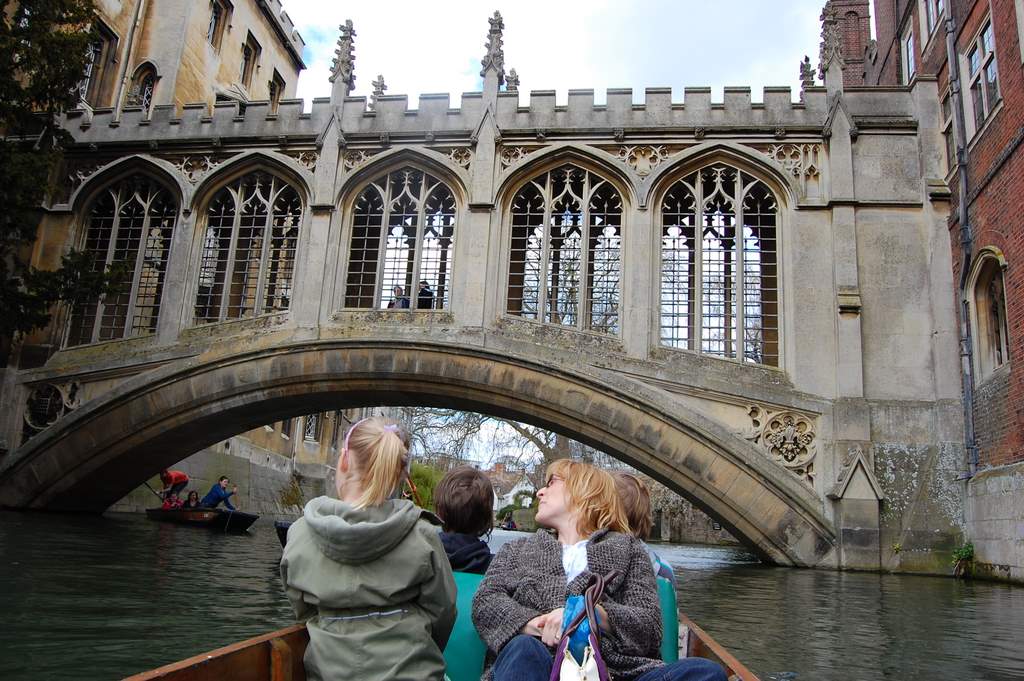
Last of all: my wife looking out on a typical valley in Wales.

Monday, 21 June 2010
Ffald y brenin
Earlier this week we drove nearly three hundred due west from London to the furthest coast of Pembrokeshire. We were booked to go on a retreat at Ffald-y-Brenin, a centre about five miles west of Fishguard. Many Christians have been here since reading a book called The Grace Outpouring.

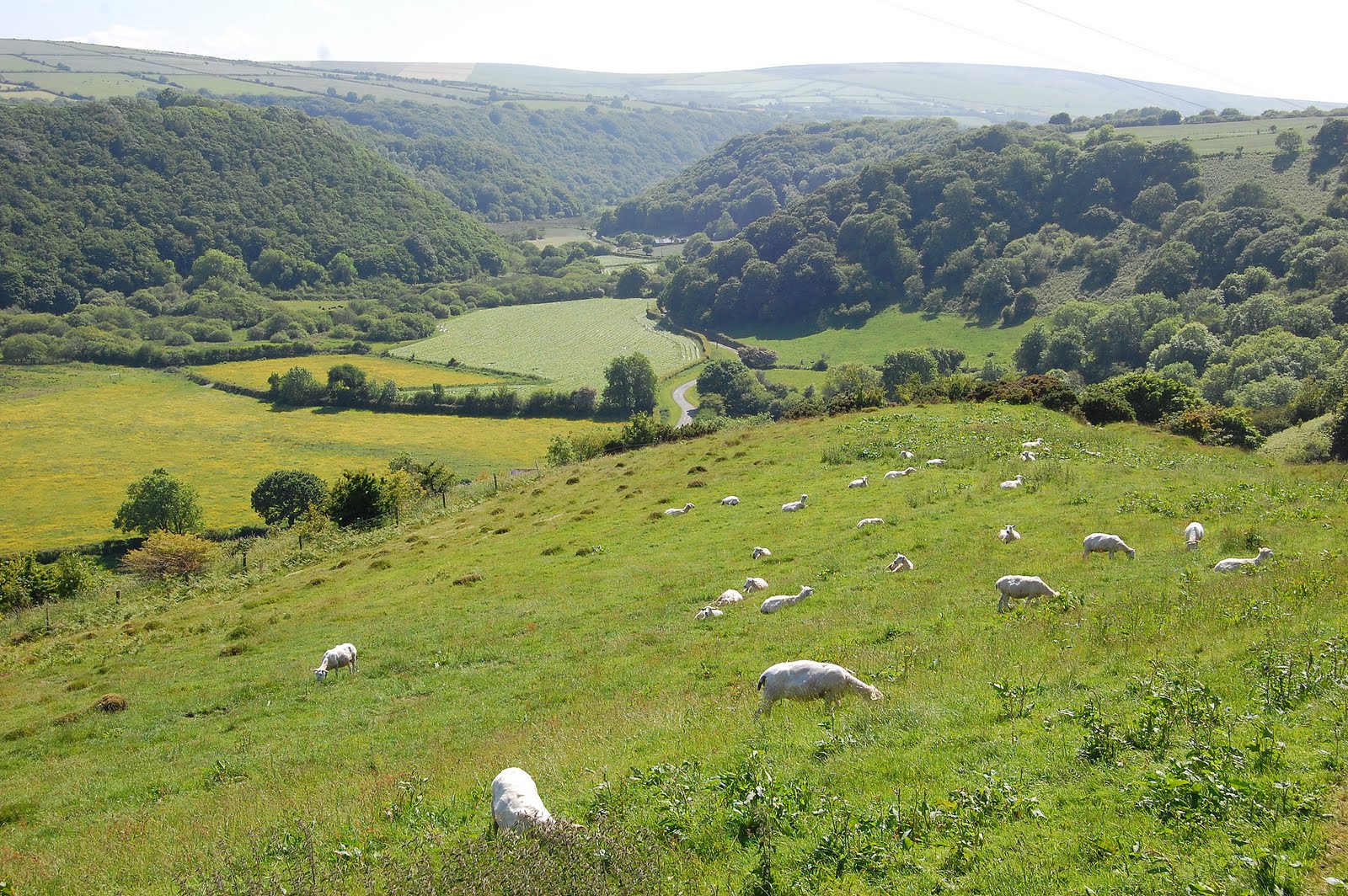
This is view overlooking Cwm Gwaun, a narrow valley of great interest and beauty. Of course the locals all speak Welsh.
At the edge of the property they have built a wooden cross. Many of the guests visit the spot to meditate and pray

The whole site has been tastefully designed and maintained.

This is the view of the tastefully designed garden with its pond full of tadpoles. the pond is fed by a stream that has been piped across the surrounding hills. The chapel below has been built around a large rock Several times a day short Celtic-style services are held.

Friday, 18 June 2010
Prayer in Mayfair
Shepherds Market

Claridges


We then went down Mount Street with its fashionable boutiques and on to the Burlington Arcade with its collection of expensive jewellers selling the most desirable and sought-after watches.
Off Mount Street there is a small oasis of greenery and quietness in the midst of this busy area. Mount Street Park is an attractive garden with an fine assortment of trees, where office workers can eat their lunches and chill out on summer days.
Nearby is the Farm Street Jesuit Centre with its beautifully ornate baroque style church.

Ignatian prayer is really quite simple. While Ignatius was recovering from a serious wound after the battle of Pamplona he asked for some novels to while away the time. Instead he was given a life of Christ by Ludolph of Saxony. Ludolph urged his readers to immerse themselves in the gospel narratives and to "hear and see these things being narrated as though you were hearing with your own ears and seeing with your own eyes." Ignatius adopted this idea and used used intensively in the training of his followers.
Ignatian prayer is taking a passage from the Bible and immersing oneself imaginatively in the text and meditiating on its content, ending with a personal conversation with Jesus.
The best introduction to all this is The God of Surprises by Gerard Hughes
Friday, 4 June 2010
Suffolk and Norfolk
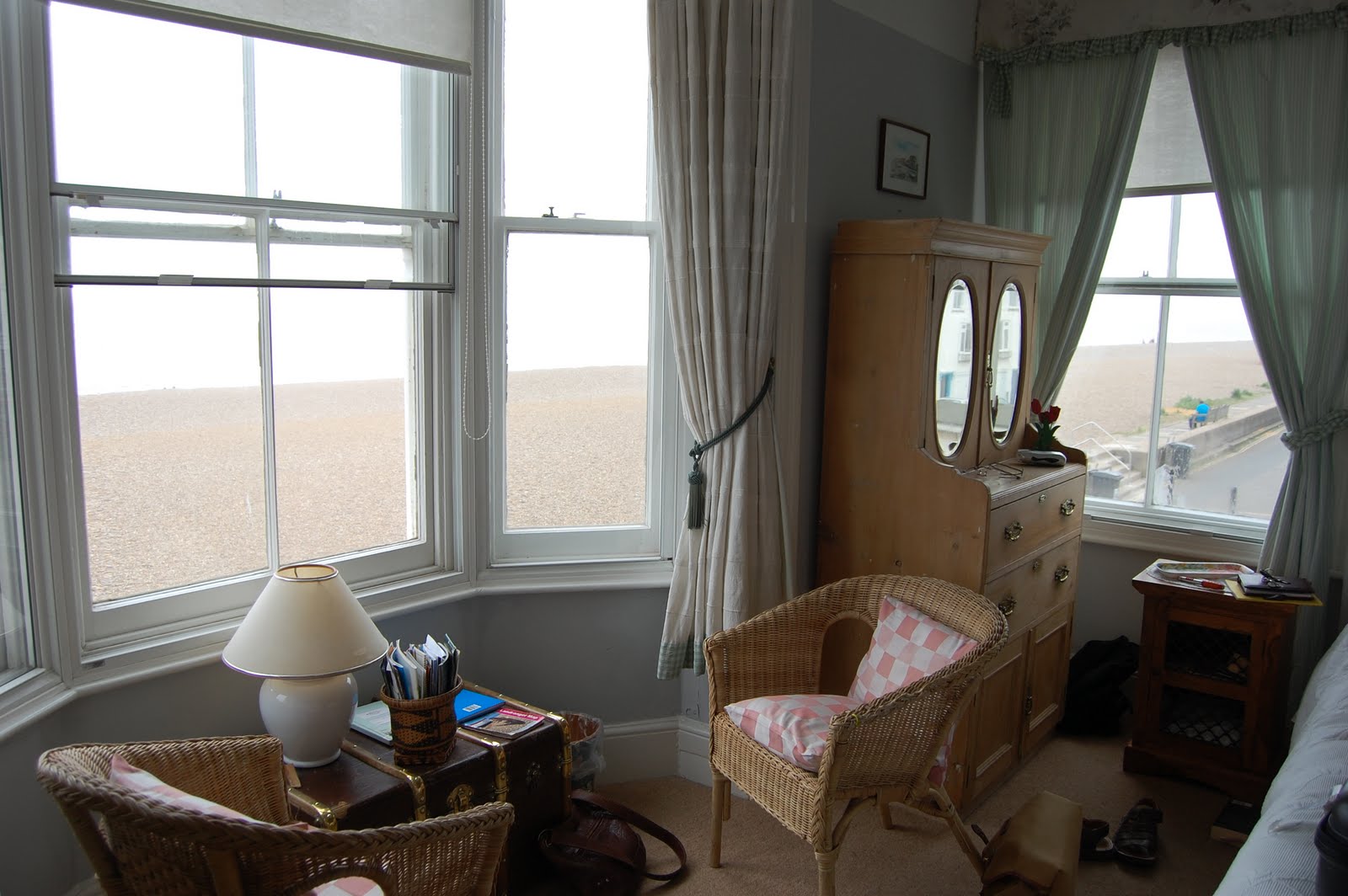

This is the view of Ocean House where we stayed. The boat seems a permanent fixture on the shingly beach. It's always there.
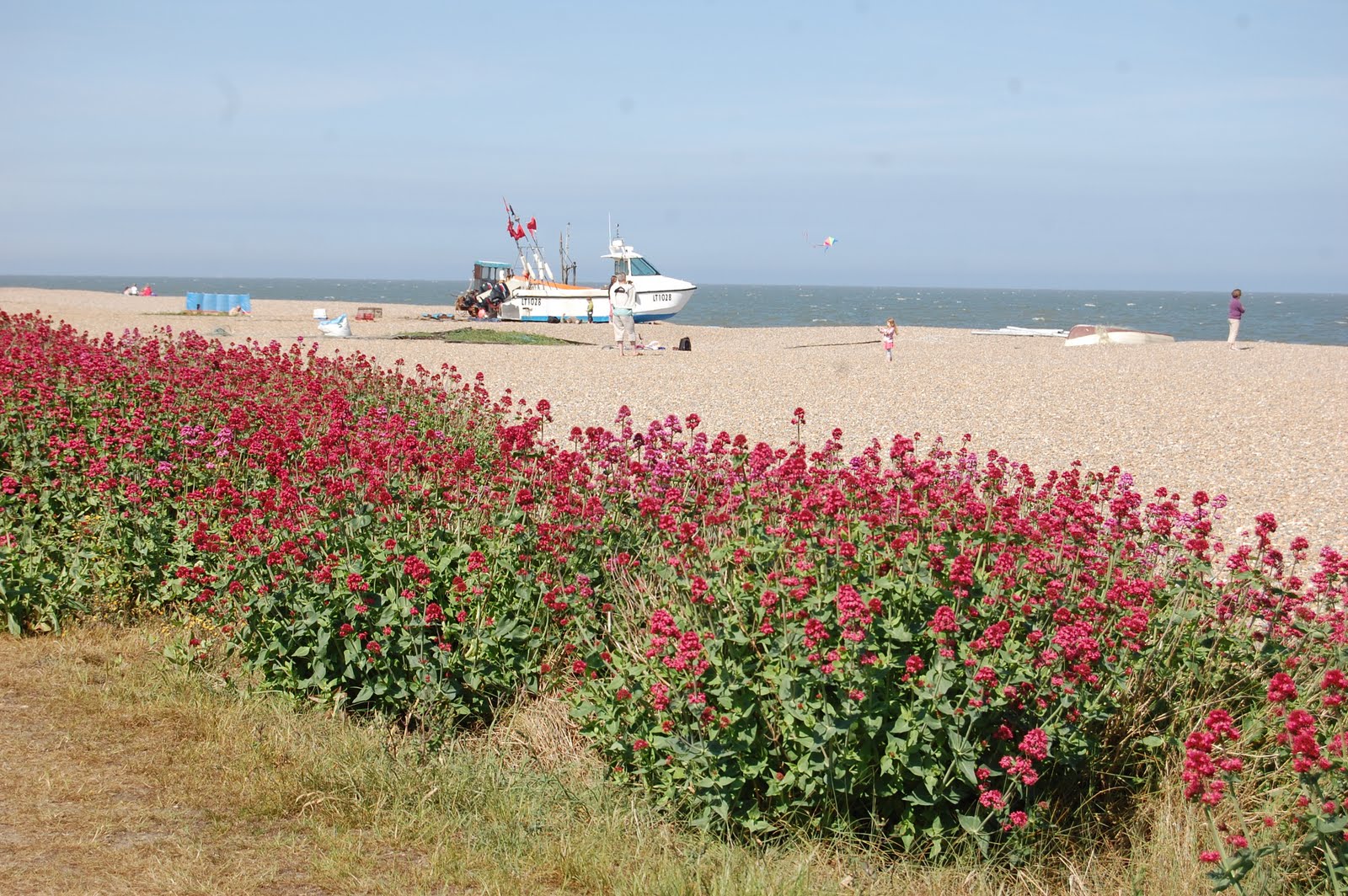
I took this shot of a boat through a mass of very attractive red-valerian, a wild flower that thrives on the shingle.


This is the view across the lake. The historic windmill can be seen and also the rather eccentric House in the Clouds, which can be hired as a holiday home.
The next day we drove over to a camp-site near to the old town of Theford. Part of the journey involved using the A1120 from Yoxford to Stowmarked. The journey took us through what I consider to be the most gloriously beautiful countryside in the whole of Europe. Everywhere nature seemed to be robed in the most splendid robe of vivid greens, the hedgerows and the masses of may-blossom adding to the scene. All along we passed through many very quaint and peaceful villages and hamlets. It was somewhat of a shock to get on the the motorway near Stowmarket.


Subscribe to:
Posts (Atom)