The above heading is the title of a new book by Brian Mclaren, outlining his revolutionary ideas concerning a radically new type of Christianity.
The first few chapters are an attempt to completely rewrite the essential narrative that has always undergirded the message of Christianity. Gone are the doctrines of Creation and the Fall. There was no primeval falling away from God. The usual narrative of the temptation and the fall into sin is interpreted in a totally different manner. Rather, it is mankind's stumbling and often rebellious coming-of- age, the gradual transition of the hunter gatherer to a pastoral society. All the previous ideas are alien importations from the philosophies of Plato and Aristotle. All the ideas that have been around for two thousand years must go, all the doctrines of the fall, redemption and the notions of heaven and hell . They are the constructs of the the Greek God Theos, as opposed to the more natural narrative of the Hebrew God Elohim. This is rather strange: the Greek term Theos is the word for God used hundreds of times in the New Testament.
When asked to define what exactly is the Gospel, Mclaren avoids any text in the epistles and goes back to the words of Jesus in Mark chapter one, "The kingdom of God is at hand". P. 184. (Note his omission of the the verb repent in the imperative voice) . The Gospel is defined on the next page in the following terms. "God's new benevolent society is among us" (British readers beware - think not of the Prudential!) While it is very true that Christianity involves benevolence to all men, I think that it is a one-sided definition. It is too humanistic. He goes on to say that Christian benevolence will bring in peace and justice and the final abolition of poverty and oppression.
I have two criticisms to make. I think his whole approach is basically horizontal. There is very little of the vertical aspects - the divine forgiveness as a result of repentance and faith and the freeing of humans from the power of sin and bondage to demonic forces are omitted. It is too humanistically optimistic.
There is little in the New Testament about the Gospel bringing peace on earth. This is usually based on a mistranslation of the verse in Luke where the angels say, "Peace on earth and goodwill to all men." Luke2:14. All modern translations, based on better manuscripts, read as follows, "Peace to men on whom his favour rests"
Peace is not simply and universally dolled out: it is a gift based on grace for those in a right covenant relationship with God. In fact Jesus said little about societal peace. Jesus said these disturbing words in Matt 10:34, " I am not come to bring peace but a sword" He then goes to describe how the gospel will divide families and the closest relationships. This has been true whenever or wherever the gospel is truly preached. It always divides, it always provokes fierce antagonism There is something in the Gospel that is profoundly threatening to the human heart. Voltaire was wrong when he said that if there was no god it would be necessary to invent him. No one in his right mind would invent the Christian God. He is too disturbing to our selfish independent existence.
The essential problem, one that is glossed over in these new theologies, is the problem of human sin and rebellion.
This a very unpopular topic at present. The New Testament presents us with a not very optimistic picture. This is illustrated by a verse in one of the prophets that seems to me to sum up the matter. "The heart is deceitful above all things and beyond cure" or desperately sick or wicked. (Jer. 17:9 _NIV) The only cure is a radical presentation of the Gospel; all other remedies are spiritual elastoplasts.
Note: I feel sorry for poor old Plato, that brilliant but dreamy philosopher who believed that the world was an illusion and that the only realities were the eternal 'forms' existing in heaven and who believed that knowledge was a recapitulation of previous existences. He is often derided by people who have never read a word of the Republic or any of his dialogues.

stats

Friday, 3 September 2010

Thursday, 26 August 2010
Post- modern Epistemology - how we know
I was talking a few days ago about post-modern forms of Christianity. They are characterised by a rejection of dogma and what they call unchristian divisiveness.
One of the foundational ideas about these days is about relativism. Thinkers no longer believe in any absolute certainties. Absolute truth is a myth. It is an intolerable concept. There is an atmosphere about that is summed up in the ideas of Lyotard (nothing to do with dance or gymnastics) and his rejection of all grand, all-explaining theories (meta-narratives) and all the so-called certainties that were the fruits of the Enlightenment, whether in science or religion or philosophy. This modernism is out of date and needs to be supplanted by dialogue and tolerance. The old certainties are gone.
These sceptical ideas go back a long time. There is nothing new under the sun. The Greek sceptics at the time of Plato are well known.
The two supreme English examples are Berkeley and Hume, both of whom lived at the time of Wesley. Berkeley was a sincere Christian who published books and dialogues concerning idealism. This doctrine says that we know only what is going on in our own minds. We can be certain of nothing else. We cannot know whether this bundle of perceptions in our heads refer to any objective reality. His Latin motto was esse est percipi - existence is based on perception. If an object is no longer perceived it no longer exists. When challenged by this question, "If an object ceases to be perceived by someone does it cease to exist?", he replied, "No, it still exists because it is perceived by the mind of God"
Ronald Knox, a Catholic wit of the last century, wrote an amusing limerick on Berkeley's idealism
One of the foundational ideas about these days is about relativism. Thinkers no longer believe in any absolute certainties. Absolute truth is a myth. It is an intolerable concept. There is an atmosphere about that is summed up in the ideas of Lyotard (nothing to do with dance or gymnastics) and his rejection of all grand, all-explaining theories (meta-narratives) and all the so-called certainties that were the fruits of the Enlightenment, whether in science or religion or philosophy. This modernism is out of date and needs to be supplanted by dialogue and tolerance. The old certainties are gone.
These sceptical ideas go back a long time. There is nothing new under the sun. The Greek sceptics at the time of Plato are well known.
The two supreme English examples are Berkeley and Hume, both of whom lived at the time of Wesley. Berkeley was a sincere Christian who published books and dialogues concerning idealism. This doctrine says that we know only what is going on in our own minds. We can be certain of nothing else. We cannot know whether this bundle of perceptions in our heads refer to any objective reality. His Latin motto was esse est percipi - existence is based on perception. If an object is no longer perceived it no longer exists. When challenged by this question, "If an object ceases to be perceived by someone does it cease to exist?", he replied, "No, it still exists because it is perceived by the mind of God"
Ronald Knox, a Catholic wit of the last century, wrote an amusing limerick on Berkeley's idealism
- There was a young man who said "God
- Must find it exceedingly odd
- To think that the tree
- Should continue to be
- When there's no one about in the quad."
- "Dear Sir: Your astonishment's odd;
- I am always about in the quad.
- And that's why the tree
- Will continue to be
- Since observed by, Yours faithfully, God."
Of course, most of us endowed with a modicum of common sense, will treat all this as a lot of intellectual nonsense. Dr Johnson, a contemporary of Berkeley, when told of his theory that matter didn't really exist, shouted loudly and said, "I refute it thus!" and kicked a nearby pillar with some force!
Wednesday, 25 August 2010
Christianity and other faiths
In my blog concerning the emerging church I made a point in paragraph 9 about Brian Mclaren's thoughts on what to advise converts, say from Islam or Hinduism, to do after their conversions. What I wrote seemed a bit too radical. I shall insert a quotation from one of Mclaren's books to illustrate what I wrote.
He writes:
I don’t believe making disciples must equal making adherents to the Christian religion. It may be advisable in many (not all!) circumstances to help people become followers of Jesus and remain within their Buddhist, Hindu or Jewish contexts … rather than resolving the paradox via pronouncements on the eternal destiny of people more convinced by or loyal to other religions than ours, we simply move on … To help Buddhists, Muslims, Christians, and everyone else experience life to the full in the way of Jesus (while learning it better myself), I would gladly become one of them whoever they are, to whatever degree I can, to embrace them, to join them, to enter into their world without judgment but with saving love as mine has been entered by the Lord
He writes:
I don’t believe making disciples must equal making adherents to the Christian religion. It may be advisable in many (not all!) circumstances to help people become followers of Jesus and remain within their Buddhist, Hindu or Jewish contexts … rather than resolving the paradox via pronouncements on the eternal destiny of people more convinced by or loyal to other religions than ours, we simply move on … To help Buddhists, Muslims, Christians, and everyone else experience life to the full in the way of Jesus (while learning it better myself), I would gladly become one of them whoever they are, to whatever degree I can, to embrace them, to join them, to enter into their world without judgment but with saving love as mine has been entered by the Lord
Monday, 23 August 2010
The emerging Church
There is a growing awareness that a new sort of church is emerging onto the scene in Europe and America. It is usually called either the emerging or emergent church. It is radically different in many ways from the traditional Anglican or Reformed or Charismatic churches.
I have decided to write a few numbered paragraphs on the subject and later I will go into more detail in other posts.
1. It has its roots in a dissatisfaction with normal church life and experience.
2. It is almost totally made up of white middle-class Christians with a good educational background. It doesn't seem to appeal to the marginalised or ethnic minorities
3. It is infinitely varied in belief and practice. Some congregations use armchairs in a circle and use large screen televisions and have varied rituals and acts culled from many sources, including liturgies from orthodox sources. Others are more traditional in their worship.
4. They all say they are on a spiritual journey into an exciting and rather unknown future. Brian Mclaren, the main writer to emerge from this new form of Christianity, writes, "It is a quest for new ways to believe and new ways to live and serve faithfully in the way of Jesus, a quest for a new kind of Christianity".
5. It seems to be influenced by the philosophic theories and ideas by two French intellectuals, Derrida and Lyotard. These writers majored on literary deconstruction and post-modernism.
6. There is a deep mistrust of propositional statements. The citing of doctrinal propositions such as, "Jesus is the only way to the Father", is looked upon as too narrowly restrictive for this modern age. (This suspicion of doctrinal propositions is fully brought out in Hans Kung's book, Infallibility.) There is a rejection of all meta-narratives. A meta-narrative is any all-inclusive system of religious or philosophic belief that provides all the answers, whether it be Marxism or Islam. Life as we know it is too varied and problematic to be boxed in this way. Thus this movement has little place for the doctrinal statements or historic creeds of the Church. All is in a state of flux.
7. There is a total rejection of all end-times theories or eschatologies and all prejudices concerning the lives of gays and lesbians.. They should totally and lovingly accepted.
8. There is very little emphasis on the corruption and deviousness of the human heart.
9. Other religions should be tolerated and respected. When a Muslim or a Buddhist decides to follow Jesus he or she can still stay in the bosom of these faiths without fear of compromise.
10. Though the movement does not seem to be interested in Biblical higher criticism and its praxis is totally different, the mood and moral stance seem to me to be very similar to the liberal theology that swept the churches in the early part of the last century
I have decided to write a few numbered paragraphs on the subject and later I will go into more detail in other posts.
1. It has its roots in a dissatisfaction with normal church life and experience.
2. It is almost totally made up of white middle-class Christians with a good educational background. It doesn't seem to appeal to the marginalised or ethnic minorities
3. It is infinitely varied in belief and practice. Some congregations use armchairs in a circle and use large screen televisions and have varied rituals and acts culled from many sources, including liturgies from orthodox sources. Others are more traditional in their worship.
4. They all say they are on a spiritual journey into an exciting and rather unknown future. Brian Mclaren, the main writer to emerge from this new form of Christianity, writes, "It is a quest for new ways to believe and new ways to live and serve faithfully in the way of Jesus, a quest for a new kind of Christianity".
5. It seems to be influenced by the philosophic theories and ideas by two French intellectuals, Derrida and Lyotard. These writers majored on literary deconstruction and post-modernism.
6. There is a deep mistrust of propositional statements. The citing of doctrinal propositions such as, "Jesus is the only way to the Father", is looked upon as too narrowly restrictive for this modern age. (This suspicion of doctrinal propositions is fully brought out in Hans Kung's book, Infallibility.) There is a rejection of all meta-narratives. A meta-narrative is any all-inclusive system of religious or philosophic belief that provides all the answers, whether it be Marxism or Islam. Life as we know it is too varied and problematic to be boxed in this way. Thus this movement has little place for the doctrinal statements or historic creeds of the Church. All is in a state of flux.
7. There is a total rejection of all end-times theories or eschatologies and all prejudices concerning the lives of gays and lesbians.. They should totally and lovingly accepted.
8. There is very little emphasis on the corruption and deviousness of the human heart.
9. Other religions should be tolerated and respected. When a Muslim or a Buddhist decides to follow Jesus he or she can still stay in the bosom of these faiths without fear of compromise.
10. Though the movement does not seem to be interested in Biblical higher criticism and its praxis is totally different, the mood and moral stance seem to me to be very similar to the liberal theology that swept the churches in the early part of the last century
Friday, 13 August 2010
Amsterdam
Meg and I spent a short break in the city of Amsterdam in Holland. It's a lively, bustling energetic city full of interesting sites and historical associations. We stayed at a hotel just outside the city in the Old South area, an area considerable prosperity.
As anybody who knows Holland will tell you, the best and easiest way of getting around is by bike. The city has over half a million in all! Nearly everyone, young and old, and rich and poor, uses the bike for all short and medium distance journeys. In fact, you are more likely to be knocked down by a bike than a car here! Everyone seems so slim and energetic, though piles of chips (fries) dipped in mayonnaise are very popular!
Outside our hotel is a rank of bikes and my wife is trying to understand the two sorts of locks used in Holland.


As anybody who knows Holland will tell you, the best and easiest way of getting around is by bike. The city has over half a million in all! Nearly everyone, young and old, and rich and poor, uses the bike for all short and medium distance journeys. In fact, you are more likely to be knocked down by a bike than a car here! Everyone seems so slim and energetic, though piles of chips (fries) dipped in mayonnaise are very popular!
Outside our hotel is a rank of bikes and my wife is trying to understand the two sorts of locks used in Holland.

I don't think you will see anywhere else a groom ferrying his bride to the town hall to be married - no posh car but a bike. The photo was taken in the main square in the nearby town of Harlem.
Near the hotel is the famous Vondel Park, the biggest and most popular in Amsterdam. It's a favourite place for joggers and all those, like ourselves, who just meander through on our bikes and enjoy a stop at one of the riverside cafes. In Amsterdam you are never far from a canal or a river.
 |
| Add caption |
Below is a typical scene in the city. Some young people sit by the edge of a canal, chilling out in the sunshine and enjoying a snack, surrounded by cycles of course!

This is a typical scene taken from one of the many bridges over a major canal

One day we took a train to the famous town of Haarlem. The photo below is the famous jewellers owned by the Ten Boom family, that was used in the war to hide Jews from the Gestapo. The Hiding Place, a film and a book, describes the amazing life of Corrie Ten Boom. The whole of her family were betrayed and perished in Ravensbruck, except Corrie, who was released for some unknown reason. She spent the rest of her life wandering from country to country telling the Gospel wherever she went.

The picture below is a shot of the magnicent Great Square of the historic city of Haarlem.

One of the most visited areas of Amsterdam is the Red Light district. In it everything goes - drug taking, lots of sex shops, live sex shows and strings of shop fronts where scantily clad girls sit in front of windows offering themselves to anyone passing by. For years the town elders have been happy to sponsor this display of tolerance and so-called sophistication. But things have started to change. They became aware that nearly all the sex workers were from Eastern Europe or Africa. It was obvious that people traffickers and foreign pimps were using psychological and physical force to run the area and to keep the girls in virtual slavery.. They are trying to deal with the problem, but it is very difficult to get witness evidence that will stand up in court.
There is a Christian group known as the Scarlet Cord trying to befriend and help the girls involved.
Wednesday, 4 August 2010
Delay
A few weeks ago I was watching a U tube extract when the internet suddenly stalled, A few minutes later a knock came at the door and a workman from the water board said, "I'm sorry - I've severed your cable." From that moment on I had no phone, no TV and no internet. Hence the large gap in communication. Fortunately all has now been restored!
Tuesday, 6 July 2010
A glimpse of England
I have decided to place a few shots of various places that I have visited in England in the past few years. It will give you a flavour of the variety of scenery you can find on a visit to our country.
The shot below is of the choir of perhaps the most famous cathedral in England. This part of Canterbury cathedral was built by the Normans, as can be seen in the rounded arches.

This is a shot of one of the splendid stain-glass windows.

During the war the German Luftwaffe tried to destroy the ancient building, but a strong wind carried the bombs away to the east of the town.
The shots below are of a sleepy Victorian seaside resort to the north-east of London - Aldeburgh


Below is one of my favourite Bed and Breakfast venues. It is found near the market town of Framlingham in Suffolk. 

Last year we went for a week to the coast of Northumbria. The coastline is superb and the towns and islands are full of historical and religious interest.


This shot is of the quaint village of Clapham in the glorious Yorkshire Dales, where the famous scientist Michael Faraday was born.

Wherever you go in England you can usually find a good pub or inn where you can chill out and refresh your tired limbs.. Many of them are hundreds of years old.


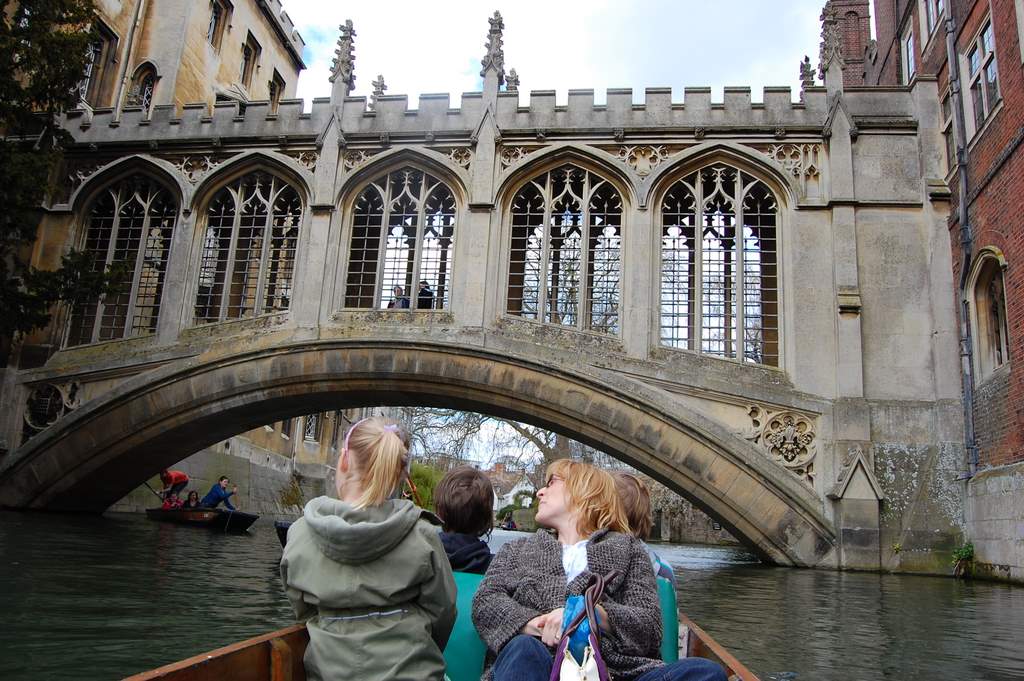
One of life's greatest pleasures is to punt along the Cam and under the Bridge of Sighs at Cambridge!
Last of all: my wife looking out on a typical valley in Wales.

Subscribe to:
Posts (Atom)